It's been a MIND FULL week of learning and growing our brains! In project, we put the final touches on our draft/critique/feedback presentations for display. We also had the chance to create a product of our choosing to show what we now know about our brain structure and function.


and mentors younger...

Second Grade readers and writers have been hard at work on summarizing narrative text via a new mnemonic, CSERT. We have found that using this system (character, setting, experience/struggle, resolution, and theme/lesson) helps us differentiate between the main idea and details when we are summarizing. We are also starting analyzing our characters. We've been developing seed ideas and creating narratives, as well as keeping up with our building words and spelling centers!
Third Grade has jumped in to analyzing poetry in duo with our book, Long Walk to Water. We've been learning about how writers use descriptive and figurative language, as well as other literary techniques, to help us visualize the story/poem in our minds. We've been trying some of that descriptive writing with our own pieces by lifting sentences...taking a part we'd like to revise out, changing it with "Show, don't Tell," and then putting it back in to make our story come alive for our readers.
SBLC Fourth Grade finished our novel, Mick Harte Was Here. We used letters to the author to express our thoughts. We told her what big ideas we will carry with us for the rest of our lives, and told her what techniques she used as a writer to bring us to capture these ideas. We also told how we would apply lessons we learned. And yes, we cried together. It's one of those magical moments as a reading community. We are starting our journey with a new historical fiction, and we whet our appetites by making notes from an interview from the author, and a book trailer. Our writing continues with expository and structure. Hard work in progress!
After hands-on exploration of matter's properties including density and volume, SBLC scientists have culminated their unit on matter with various projects. Second graders applied their understanding of properties by creating Mystery Matter riddles. Third graders chose three objects to include in a Matter Museum "exhibit", then collected and recorded data about each one. Fourth graders invented a matter board game to compare and contrast properties of matter with complex questions (and answers). Our scientists have shown such creativity and effort in their projects!
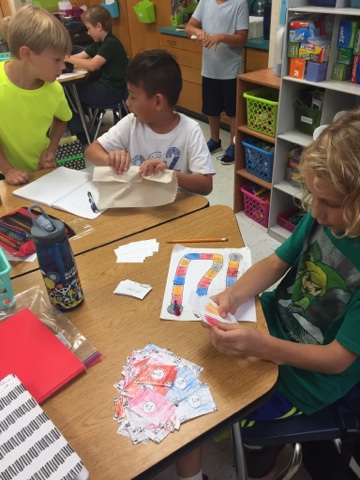

Mathematicians had a busy week applying financial literacy skills. As you've probably heard at home, we started the week by finding our total number of deposits and voting electronically for our currency designs. Each SBLC consumer learned about fixed expenses and made the choice to either purchase or rent his or her book box. We had some big discussions at each grade level about budgeting, so your students may ask you about fixed expenses that you consider while budgeting at home. Each student made a plan for how much they wanted to save and the amount they planned to spend. Then our eager consumers filled their wallets with our freshly printed SBLC currency. Friday morning we had parents volunteer their time to help students make careful spending and saving decisions. Here are a few pictures of your consumers choosing their goods:


Comments
Post a Comment