It's felt like the week blew by, but we've got a lot accomplished in that amount of time. Our focus this week was effort, specifically in the area of asking questions. We've noticed that our effort in finding sometimes means that we just want to be shown the solution, rather than taking the steps to struggle through confusion and then climbing that ladder towards understanding. It's that process of confusion and learning where we need to be asking questions: for clarification, for help, for direction, and even out of curiosity. Finding in our minds where we last understood something...and then asking questions to move forward. It's fostered a lot more discovery and discussion in our classrooms, and hopefully at home!
In reading and writing, we've been exploring our two Bluebonnet novels deeply, using them as models for our own writing process. We've been inferring, predicting, giving text evidence, and writing about the author's purposes for specific scenes and language.
Fourth Grade completed their first STAAR test on Tuesday. They worked so hard and we are extremely proud of their effort!
Second and Third grade mathematicians built and classified quadrilaterals, continuing their study of 2-dimensional shapes. They discovered that decomposing 2-dimensional shapes relates to so many areas of math and made some insightful connections between area, fractions, division, and polygons. By the week's end, we moved into 3-dimensional shapes. Kiddos have been hard at work building with magnetic blocks for 3-D faces, toothpick edges, and marshmallow vertices.


All mathematicians practiced using a graphic organizer to help attack word problems, and our problem solving abilities are getting so strong! We're becoming more mindful to make an estimate with compatible numbers first and to make sure our final answers are both reasonable and accurate. 4th graders started a daily computation review and are working hard to improve accuracy with all 4 operations.
On Monday, second and third graders checked in on our Kiker keyhole gardens. After we tasted snap peas, carrots, and butter lettuce, we planted some new veggies. We can't wait to try the tomatoes and peppers once they're grown!


We continued our study of rocks and after conducting a series of tests, have started determining the types of rocks in our collection.
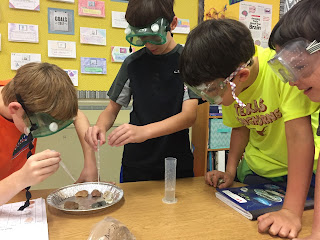


SBLC geologists also investigated some of the slow changes that can cause changes to earth's surface, like weathering, erosion, and deposition.


We ended the week with a fourth grade field trip! After seeing a Bollywood version of the Jungle Book, we enjoyed a lovely picnic in Zilker Park.

Happy Weekend!
Team SBLC
In reading and writing, we've been exploring our two Bluebonnet novels deeply, using them as models for our own writing process. We've been inferring, predicting, giving text evidence, and writing about the author's purposes for specific scenes and language.
Fourth Grade completed their first STAAR test on Tuesday. They worked so hard and we are extremely proud of their effort!
Second and Third grade mathematicians built and classified quadrilaterals, continuing their study of 2-dimensional shapes. They discovered that decomposing 2-dimensional shapes relates to so many areas of math and made some insightful connections between area, fractions, division, and polygons. By the week's end, we moved into 3-dimensional shapes. Kiddos have been hard at work building with magnetic blocks for 3-D faces, toothpick edges, and marshmallow vertices.


All mathematicians practiced using a graphic organizer to help attack word problems, and our problem solving abilities are getting so strong! We're becoming more mindful to make an estimate with compatible numbers first and to make sure our final answers are both reasonable and accurate. 4th graders started a daily computation review and are working hard to improve accuracy with all 4 operations.
On Monday, second and third graders checked in on our Kiker keyhole gardens. After we tasted snap peas, carrots, and butter lettuce, we planted some new veggies. We can't wait to try the tomatoes and peppers once they're grown!


We continued our study of rocks and after conducting a series of tests, have started determining the types of rocks in our collection.


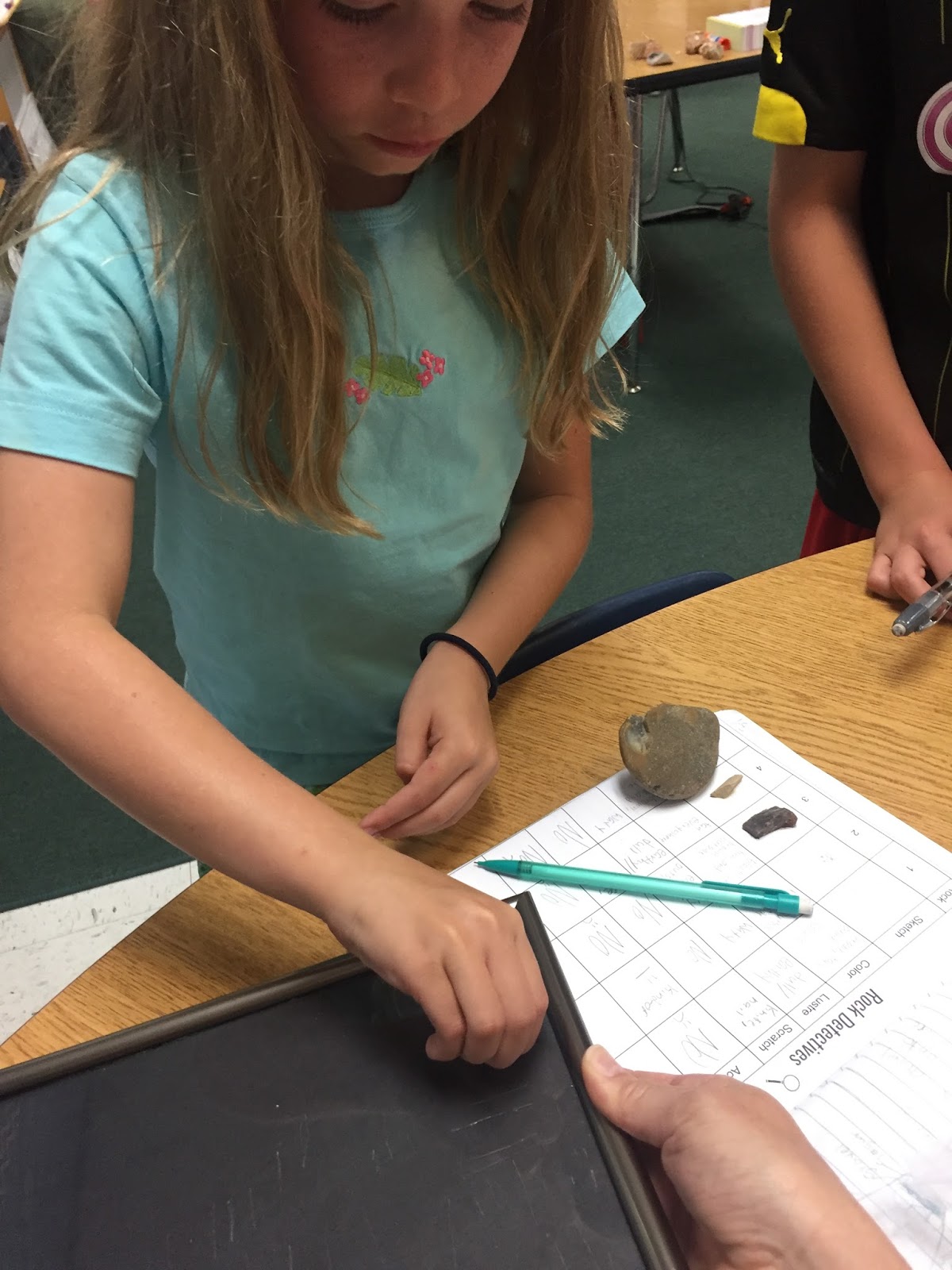
SBLC geologists also investigated some of the slow changes that can cause changes to earth's surface, like weathering, erosion, and deposition.


Fourth grade researched one of the critical ways rock was used in the 18th century when Spanish missionaries built aqueducts to irrigate crops, provide drinking water, and power mills. Stay tuned for the models they're building!

We ended the week with a fourth grade field trip! After seeing a Bollywood version of the Jungle Book, we enjoyed a lovely picnic in Zilker Park.

Team SBLC
Comments
Post a Comment